
From signing with the Philadelphia Phillies to winning three World Series championships with the San Francisco Giants, AstroTurf Regional Sales Manager Kevin Christman has spent a lifetime around the game he loves. Now, he’s bringing decades of professional baseball experience to the next generation of playing surfaces.
Few people understand baseball from as many perspectives as Kevin Christman. A former professional player, accomplished Major League Baseball scout, championship-winning organization member, and longtime youth baseball coach, Christman has experienced nearly every level of the game.
Today, as AstroTurf’s Regional Sales Manager for Indiana, he brings that experience to a different side of baseball: helping schools, athletic programs, and communities develop facilities where the next generation of athletes can compete and grow.
For Christman, baseball has always been more than a game. It has been a lifetime of relationships, challenges, lessons, and unforgettable experiences.
The Early Years: Making a Name Among the Pros
Christman’s journey began in the South Bay area of San Francisco, where his passion for baseball quickly placed him in competition with players far beyond his age group.
While still in high school, Christman participated in a competitive winter baseball league featuring former Major League and Minor League players. Unlike many youth leagues, the competition used wooden bats and exposed young athletes to the challenges and expectations of professional baseball.
As one of the youngest players in the league, Christman found himself surrounded by experienced competitors who had already played at the highest levels.
Rather than being intimidated, he embraced the opportunity.
Competing against older, more experienced players accelerated his development and helped him understand what it would take to succeed at the next level. The experience also gave him something equally valuable: mentorship from players who understood the professional game.
Through strong performances and consistent competition against established talent, Christman began attracting attention from professional scouts.
Those early experiences would eventually help launch a career spanning playing, coaching, scouting, and player development.
One person, however, stands above the rest when Christman reflects on the coaches who shaped his career: his father, Ron.
The lessons passed down from his father formed a foundation that continued to influence his approach to baseball long after his playing career ended.
A Dream Realized: Signing with the Philadelphia Phillies
In 1984, Christman’s baseball journey reached a major milestone when he signed with the Philadelphia Phillies.
At the time, the Phillies were among baseball’s most recognizable organizations. Coming off a National League pennant in 1983 and having captured the World Series championship in 1980, Philadelphia had built a tradition of winning.
The franchise was associated with legendary names such as Mike Schmidt, Steve Carlton, and Pete Rose, making the opportunity to join the organization particularly meaningful.
For a young player who had spent years working toward a professional opportunity, becoming part of that tradition was a proud accomplishment.
Christman remembers the excitement of joining a franchise with such a strong identity and history.
It was not simply the fulfillment of a personal dream. It was an achievement shared with the family, coaches, and mentors who had supported him throughout his development.
Yet signing a professional contract was only the beginning.
The Reality of Professional Baseball: Learning to Grind
Professional baseball is often associated with packed stadiums, championship celebrations, and the excitement of competing at the highest level.
Christman knows firsthand that the reality behind those moments can be considerably more demanding.
Over six years as a professional player, he experienced long road trips, uncertainty, constant competition, and mental challenges that define life in professional baseball.
Players must learn to handle failure while maintaining the confidence necessary to compete the following day.
A great performance can make an athlete feel as though everything has finally come together. A difficult stretch can bring that same athlete back to questioning his mechanics, preparation, and ability.
Christman describes professional baseball as an environment where players must grow quickly.
Developing an even-keeled mentality, letting setbacks roll off your shoulders, and continuing to work through difficult stretches are essential parts of surviving in the game.
The lessons extend far beyond baseball.
Success demands discipline, preparation, adaptability, and the ability to remain focused even when circumstances change.
Those principles would eventually become valuable tools throughout Christman’s scouting career and continue to influence his professional approach today.
From Player to Scout: Recognizing the Next Generation of Greatness

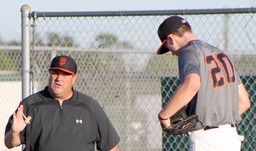
Following his playing career, Christman transitioned into scouting and player development, where he discovered another way to contribute to the sport.
As a scout, the challenge changes from performing on the field to identifying the players who possess the ability, mentality, and determination to succeed at increasingly competitive levels.
Christman spent years evaluating talent, including a significant tenure with the San Francisco Giants organization, where he served as an area scout beginning in 2006.
Throughout his scouting career, he evaluated and followed players who would become familiar names throughout Major League Baseball, including Geoff Jenkins, Scott Karl, Adam Duvall, Buster Posey, Brandon Crawford, and Madison Bumgarner.
Scouting requires far more than recognizing a strong throwing arm or an impressive batting average. It means understanding an athlete’s competitive instincts, work ethic, adaptability, and potential for long-term development.
That perspective has given Christman a unique appreciation for the qualities that separate talented players from truly successful ones.
One player who left a particularly strong impression on him was Ken Caminiti.
Christman remembers Caminiti as an intensely competitive player who brought tremendous energy and determination to the field.
His relentless approach to competition embodied the toughness and commitment Christman has long admired in baseball players.
Another relationship that remains meaningful today is his connection with former Major League infielder Neil Walker, who played for organizations including the Pittsburgh Pirates, New York Yankees, and Miami Marlins.
For Christman, those lasting connections are an important part of what makes a lifetime in baseball so rewarding.
Three World Series Championships: A Career at the Highest Level
One of the defining chapters of Christman’s career came through his involvement with the San Francisco Giants during one of the most successful stretches in franchise history.
As a member of the Giants scouting organization, Christman was part of three World Series championship seasons: 2010, 2012, and 2014.
Those championships represented the culmination of years of organizational effort, from scouting and player development to coaching and performance on the field.
For scouts, championships carry a special meaning. While fans see the final product under the lights of a Major League stadium, scouting departments have spent years evaluating talent and helping construct the foundation of a winning organization.
Each championship reinforced the importance of finding the right players, developing talent, and building a culture that can sustain success at the highest level.
Those three titles remain among Christman’s favorite baseball memories.
But even championship organizations experience disappointment.
Christman also remembers the Giants’ 2016 postseason elimination at the hands of the Chicago Cubs as one of the more difficult moments of his career.
For someone who has experienced both the highest highs and the challenges of postseason defeat, the contrast serves as another reminder of baseball’s unpredictable nature.


Developing Players and Giving Back to the Game
While Major League championships occupy a special place in Christman’s memories, some of his most rewarding experiences have come from working directly with young athletes.
Throughout his career, he has remained involved with coaching, mentoring, and developing players looking to advance in the sport.
One of his proudest coaching memories was leading a Giants scout fall team in World Wood Bat Association competition, including championship success in youth showcase baseball.
For Christman, opportunities like these offer the chance to pass along lessons learned from decades of competition.
Young players benefit from instruction in mechanics, preparation, and fundamentals, but they also need guidance in handling the mental demands of the sport.
Christman’s background allows him to explain the realities of professional baseball from firsthand experience rather than theory.
He knows what scouts look for, how players are evaluated, and the importance of approaching each opportunity with the right mindset.
Most importantly, he understands that development does not happen overnight.
It requires consistent instruction, quality competition, and a willingness to learn from both success and failure.
Baseball Beyond the United States: An Australian Adventure
Among the many destinations baseball has taken him, Christman remembers his experience in the Australian Professional Winter League particularly fondly.
While much of his professional career centered around the United States, Australia offered a completely different experience both on and off the field.
From remarkable beaches and vibrant cities to the country’s natural beauty, the experience introduced him to a new culture through the sport he loved.
What stood out most, however, was the people.
Christman recalls the welcoming atmosphere and relationships formed during his time in Australia as some of the most memorable parts of his career.
It was a reminder that baseball can connect people across countries, cultures, and backgrounds.
For someone who has dedicated his life to the sport, those relationships remain just as important as victories and individual accomplishments.
How Baseball Has Changed: Technology, Strength, and Fundamentals
Having experienced several decades of baseball, Christman has witnessed significant changes in how athletes train, compete, and are evaluated.
Today’s players are bigger, stronger, and more physically developed than many of their predecessors.
Advances in strength training, technology, and performance analytics have transformed nearly every aspect of the sport.
Modern scouting departments use data to evaluate pitch characteristics, exit velocity, throwing velocity, and countless other performance measurements.
While those tools provide valuable information, Christman believes that the increased focus on measurable athletic performance has sometimes come at the expense of traditional baseball fundamentals.
Skills such as situational hitting, moving runners, defensive execution, and understanding game situations remain essential to winning baseball.
He would like to see the sport return to a stronger emphasis on those elements.
From an offensive perspective, that means getting runners on base, advancing them, and finding ways to drive them home. On the mound, it means attacking the strike zone, controlling counts, and executing pitches effectively.
For Christman, the future of baseball does not need to be a choice between modern innovation and traditional fundamentals.
The best version of the game can embrace physical development and new technology while maintaining the baseball knowledge and competitive discipline that have always defined successful teams.
Bringing a Lifetime of Baseball Experience to AstroTurf
Today, Christman applies that same perspective to his role as Regional Sales Manager for AstroTurf in Indiana.
After decades spent playing on fields, evaluating athletes, coaching young players, and working within Major League organizations, he understands how important a quality playing surface can be to the overall baseball experience.
For Christman, a baseball field is not simply a facility. It is where young athletes develop their skills, coaches establish expectations, and teams build their identities.
A well-designed playing environment should support consistent competition, reliable ball response, dependable footing, and the demands of repeated practices and games.
Those priorities align with AstroTurf’s approach to developing baseball-specific synthetic turf systems.
Through the AstroTurf Diamond Series, the company focuses on the unique performance requirements of baseball and softball, from the interaction between the ball and playing surface to the demands placed on athletes at every position.
Christman’s experience provides a valuable perspective when speaking with athletic directors, coaches, facility managers, and organizations considering new baseball facilities.
He understands the game from the player’s perspective, recognizes the expectations of coaches, and appreciates the role that quality facilities play in player development.
That combination allows him to approach field projects with more than a traditional sales perspective.
He brings a lifetime of baseball knowledge to conversations about creating environments where athletes can perform, and communities can invest in the future of their programs.
A Lifetime in Baseball, and a Commitment to What’s Next
For Kevin Christman, baseball has been a constant throughout every chapter of his professional life.
From competing against former professional players as a teenager in Northern California to signing with the Philadelphia Phillies, scouting future Major League talent, and celebrating three World Series championships with the San Francisco Giants, his career reflects an extraordinary range of experiences within the game.
Along the way, the most meaningful lessons have remained remarkably consistent.
Work hard. Stay competitive. Learn from failure. Respect the fundamentals. Build relationships that last beyond the final out.
Those are principles Christman learned early in his career and continues to bring to the next generation of baseball.
Today, at AstroTurf, his focus has shifted from identifying the next great player to helping provide the fields where future generations will develop.
And while the game continues to evolve, one thing remains unchanged: the importance of creating opportunities for athletes to compete, grow, and build lifelong memories on the diamond.
For Christman, it’s another way to give back to the game that has given him so much.


